MTP Abortion Kit: Complete Guide to Using It the Right Way
- September 16, 2026
An MTP (Medical Termination of Pregnancy) kit contains 5 tablets. The first tablet, Mifepristone 200 mg, is swallowed with water on Day 1. After a 48-hour gap, the remaining 4 tablets (Misoprostol) are dissolved under the tongue or between the cheek and gum. The kit works only up to 7 weeks of pregnancy, must be taken on a gynecologist’s prescription, and should be used only after an ultrasound confirms the pregnancy is inside the uterus.
Medical termination of pregnancy (MTP) means ending a pregnancy with medicines instead of surgery. It is a very common topic, yet one that is often misunderstood. This guide answers the questions women ask most about MTP pills: when to take them, how to take them, what to expect, and when to seek urgent help.
Until When Can You Take an MTP Kit?
In India, MTP pills are licensed for use only up to 7 weeks of pregnancy. The medicine works best within this window. After 7 weeks, its effect reduces week by week, and the chances of incomplete abortion go up. When some pregnancy tissue stays behind, a surgical evacuation (D&C) may be needed.
What Is Inside an MTP Kit?
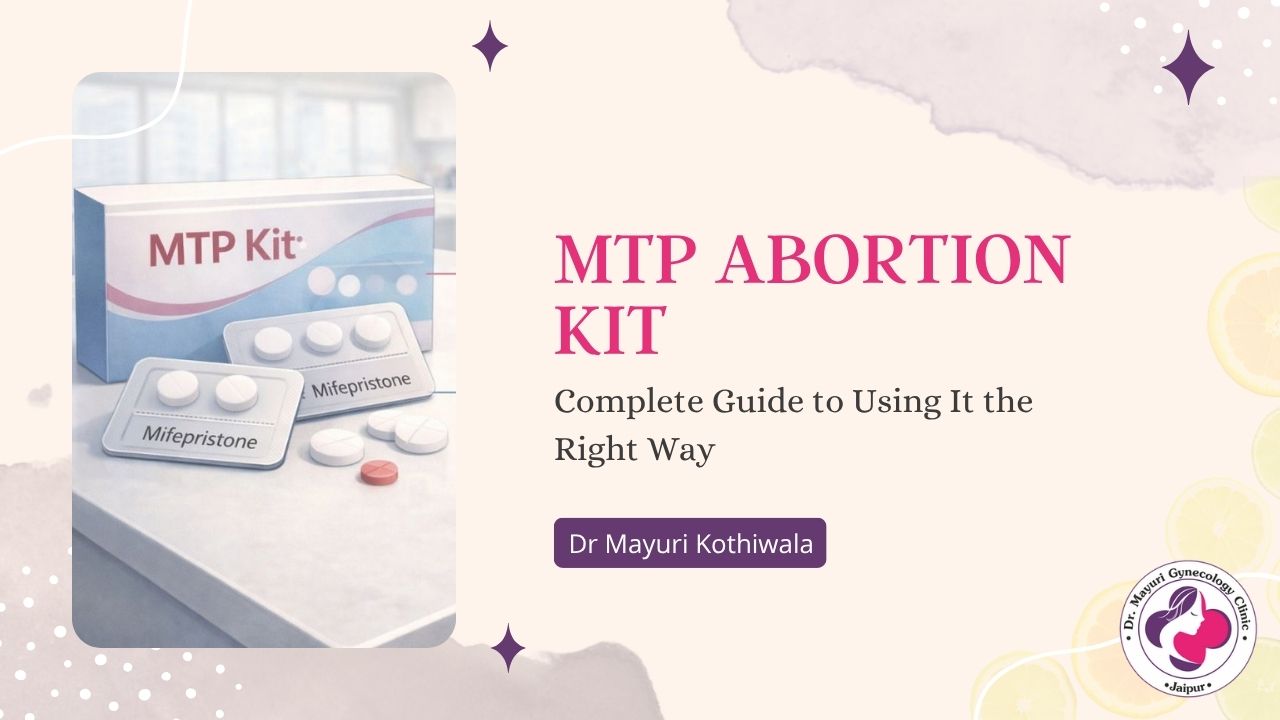
One kit has five tablets:
- 1 tablet of Mifepristone (200 mg): It blocks progesterone, the hormone that supports pregnancy, so the pregnancy cannot continue to progress.
- 4 tablets of Misoprostol: They make the uterus contract and push out its contents. This causes the bleeding and cramping of an abortion.
Both medicines work differently and do different jobs. Taking only one of them will not complete the process.
How to Take an MTP Kit: Step by Step
Step 1 (Day 1): Swallow the Mifepristone tablet with water, like any normal tablet.
Step 2: Wait 48 hours (two days). Some doctors use a 24-hour gap, and your doctor may advise a different schedule. The 48-hour gap is the method best supported by medical literature and studies as more effective.
Step 3 (Day 3): Take all 4 Misoprostol tablets together. Do not swallow them with water. Place them under the tongue, or two on each side between cheek and gum, and let them dissolve on their own. This takes about 5 to 7 minutes.
If four tablets feel like too many, you may take them as 2 + 2, but immediately one after the other. Do not leave a gap of 6 or 8 hours between them.
Why under the tongue? The medicine is absorbed directly into the bloodstream. If you vomit afterwards, it makes no difference, because the medicine is already absorbed. Swallowing with water reduces effectiveness, and vomiting after swallowing can mean the tablet gives no result. Placing tablets in the vagina is less reliable, as they may slip out without you noticing.
What to Expect After Taking the Kit
After Mifepristone (Day 1): In most women (about 95-96%), there is no bleeding or pain. A little spotting or mild nausea can occur and usually settles within 24 hours. Even if some bleeding starts, you must still take the remaining four tablets on Day 3. Do not skip them, because the two medicines do different jobs.
After Misoprostol (Day 3): Bleeding and cramps usually begin anywhere from half an hour to 24 hours after the tablets, most often within the first few hours.
- The first bleeding is heavy, heavier than a normal period, and may contain clots.
- In pregnancies of 6 to 7 weeks, you may see white, tissue-like material pass out.
- Heavy bleeding and pain typically last a few hours, then reduce gradually.
- Bleeding settles over 3 to 4 days and generally stops completely within 10 to 12 days.
If there is no bleeding even 24 hours after the four tablets, the medicine has not worked. Do not keep waiting. See your doctor.
Pain, Nausea and Other Side Effects
Common side effects last up to about 24 hours as the medicine leaves your body:
- Cramping lower abdominal pain
- Heavy bleeding
- Mild fever
- Loose motions
- Nausea or vomiting
- Weakness and tiredness
Painkillers are safe. Common period-pain medicines (such as mefenamic acid or drotaverine combinations) do not affect the abortion process. You do not need to bear severe pain for the abortion to complete. You can also take medicines for vomiting if needed. Choose a painkiller that suits you and that you are not allergic to, ideally the one prescribed by your doctor.
Why an Ultrasound Is Essential Before Taking the Kit
Taking an MTP kit without an ultrasound is like riding a motorcycle without a helmet. Ultrasound serves two important purposes:
- Dating the pregnancy. Irregular periods, implantation bleeding or late conception can make it hard to know how far along you are. Many women who think they are 4 to 5 weeks pregnant turn out to be further along on ultrasound. The kit works only up to 7 weeks.
- Ruling out ectopic pregnancy. An ectopic pregnancy is one located outside the uterus, such as in the fallopian tube. The uterus has thick walls, but a tube cannot tolerate strong contractions and may rupture internally. This can cause internal bleeding, a fall in blood pressure, shock and emergency surgery. Ectopic pregnancy cannot be managed with these tablets.
MTP tablets are suitable when the pregnancy is under 7 weeks and inside the uterus (intra-uterine) with no complications.
Who Should Not Take an MTP Kit on Their Own?
Always tell your doctor about the following before starting:
- Anemia (low hemoglobin): Heavy bleeding can lower blood pressure and lead to shock.
- Bleeding disorders such as thrombocytopenia or porphyria, where blood does not clot well.
- Allergy to any of these medicines.
- Ongoing treatment, including antibiotics, steroids or any long-term medication.
- Liver disease, chronic kidney disease, heavy smoking or heavy alcohol use.
- Breastfeeding: The medicines pass into breast milk. Your doctor will advise stopping breastfeeding, or expressing and discarding the first milk after taking the tablets.
- Copper-T (IUCD) in place: If you conceive with a Copper-T in the uterus, it must be removed before starting the abortion. Inform your doctor.
- Previous C-section: A C-section is not a restriction in itself, but there is a risk of scar ectopic pregnancy, where the pregnancy implants on the old surgical scar. Taking tablets in that situation can cause rupture, heavy bleeding and shock. Take the kit only after an ultrasound has ruled it out.
Follow-Up: How to Confirm the Abortion Is Complete
A follow-up visit is planned around Day 14 to 15 with an ultrasound, which is the confirmatory test that the process is complete.
Do not use a home urine pregnancy test to check. The pregnancy hormone (beta-hCG) can stay in the body for 20 days to about a month after a complete abortion, so a urine test can stay positive and cause needless stress, time and expense. If you wish to repeat a urine test, wait at least four weeks, and test earlier only if you want a scan to confirm.
Conclusion
An MTP kit can be safe and effective when it is taken at the right time (under 7 weeks), in the right way, and after proper evaluation. The most important steps are an ultrasound before starting, following the prescribed schedule, recognizing warning signs, and attending the follow-up ultrasound. Never take these tablets on your own. Plan with your doctor, be vigilant and stay safe.
Frequently Asked Questions
Until which week can I use the MTP kit?
Only up to 7 weeks of pregnancy, after an ultrasound confirms the pregnancy is inside the uterus.
When does bleeding start after the MTP kit?
Usually from half an hour to 24 hours after Misoprostol. If nothing happens in 24 hours, consult a doctor.
How long does bleeding last?
Heavy for the first few hours, settling in 3 to 4 days, and stopping within 10 to 12 days.
Can I take a painkiller?
Yes. Painkillers do not affect the abortion process.
Can I buy an MTP kit from a medical store without a prescription?
No. The kit should be obtained only from authorized outlets with a doctor’s prescription. Over-the-counter use often leads to complications.
Can I take an MTP kit after a C-section?
It is possible, but only on a doctor’s advice and after ultrasound rules out scar ectopic pregnancy.
Is It Safe to Use MTP Pills Repeatedly?
MTP pills are not a contraceptive. They are acceptable when a contraceptive fails or an unexpected pregnancy occurs once or twice, under medical supervision. Repeated use can cause anemia, weakness, infection and uterine weakness, which may later affect conception and the baby’s growth. A single use does not affect future pregnancies, as the tablets wash out of your body within 24 hours.
How Is Pregnancy Duration Calculated?
Pregnancy is counted from the first day of your last period, not from the date of intercourse. This applies to women with regular cycles. Even with a perfectly regular cycle, pregnancy is typically detected at about 4.5 to 5 weeks.